Context
The economic impact of suboptimal patient safety is substantive, although often poorly characterised, and has motivated most health and care systems to develop policies, strategies and interventions such as those that change systems of care, workforce composition or treatment processes such as medication prescribing behaviour. These are often costly, with variable evidence of impact on patient outcomes or costs. Implicit attachment of value to avoiding preventable harm may also cloud what resources decision- makers are prepared to allocate to patient safety initiatives.
In an increasingly financially constrained healthcare environment, it is essential to be clearer about the true economic impact of suboptimal patient safety, and initiatives to improve safety. We hope to encourage conversations about the economics of safety, including methodological challenges, so that more people are involved and confident in working in this space.
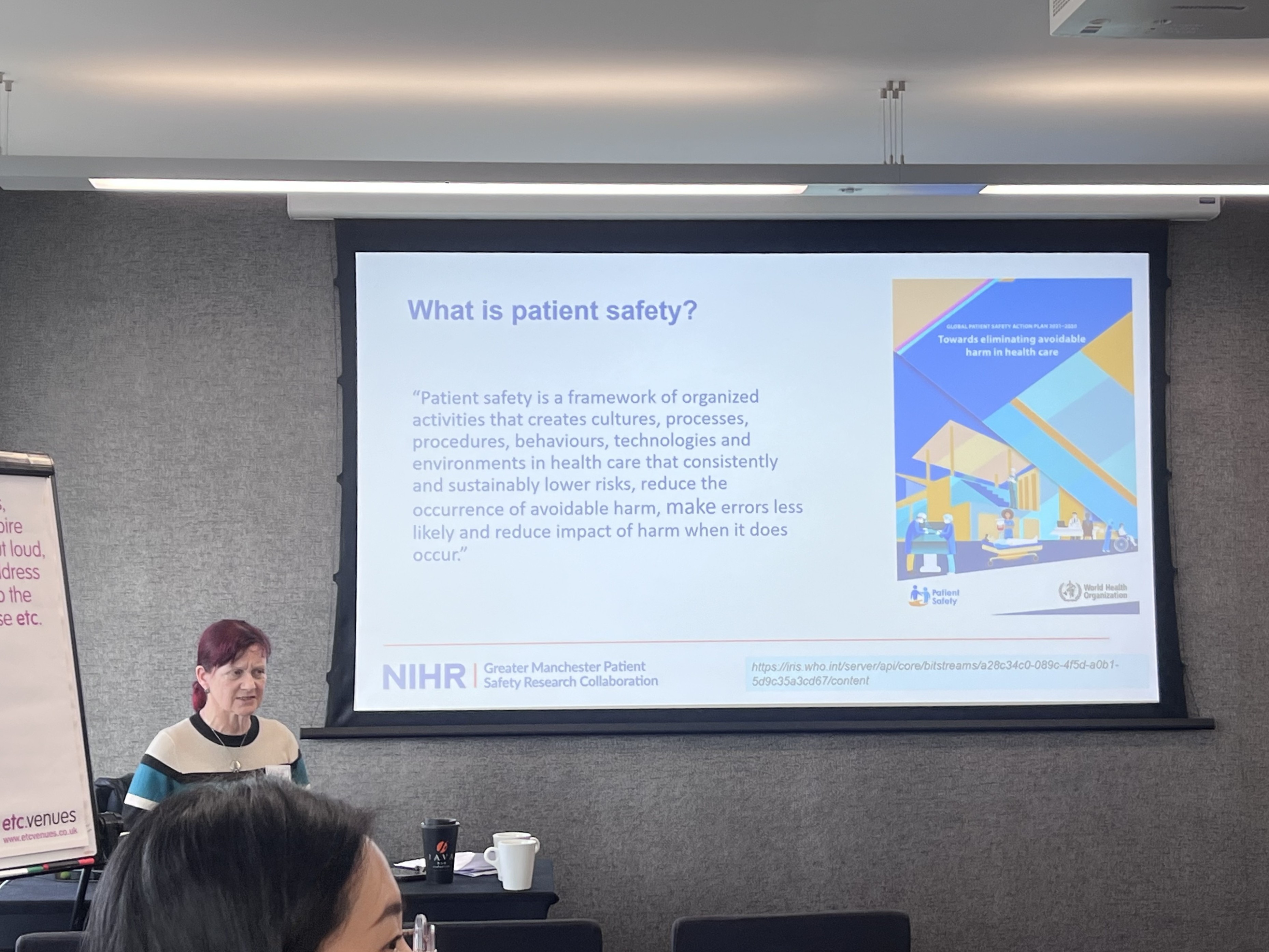
Sub-group session - launch event
This session was convened by Rachel Elliott and Alireza Mahboub-Ahari,
both from The University of Manchester.
The session started with a presentation that included a brief introduction
to the economics of safety by Rachel Elliott.
This was followed by an overview of safety economics work being done
in the NIHR Patient Safety Research Collaborations (PSRCs), and Ali introduced the PSRC Health Economics working group.
The group discussion that followed revolved around methodology and
what are the challenges in safety economics that might benefit from a community of practice?
Future plans
We want to expand the community of practice that has already been set up as the Safetynet Health Economics Working Group. We would like to widen participation beyond the PSRCs to all people working, or interested in, the economics of safety.
As the group evolves, it might involve seminars and a forum for sharing ideas, training for health economist and public members, resources to facilitate meaningful involvement, and opportunities for collaborations to form to undertake research in this area.
If you are interested in learning more or joining the Safetynet Health Economics Working Group, please contact Ali Mahboub-Ahari.
Upcoming seminars
Seminar 2: A Cost-Effectiveness Estimation of the Attempted Suicide Short Intervention Programme (ASSIP): An economic evaluation of a targeted intervention for individuals at high risk of repeat suicide attempts in Flanders
 Presenter: Dr Max Lelie is a health economist and postdoctoral researcher at the Vrije Universiteit Brussel. He holds a PhD in Health Economics from VUB, where his work focused on the design of mathematical models for health economic evaluation, with particular attention to population screening.
During his doctoral research, he contributed to several applied policy projects, including the Helppfl programme, where he was involved in a series of health economic evaluations of mental health interventions. In parallel, he developed and applied modelling approaches to cancer screening, focusing on cost-effectiveness, epidemiological consistency, and broader societal impacts. He is currently a full-time postdoctoral researcher at the Vrije Universiteit Brussel.
Date: 22 June 2026
Time (UK): 1:00–2:30 pm
This seminar will present findings from a recent economic evaluation of the Attempted Suicide Short Intervention Programme (ASSIP) in Flanders. The study examined whether ASSIP offers good value for money compared with treatment as usual for people who have previously attempted suicide, using a long-term model to estimate costs and health outcomes over 20 years. The findings suggest that ASSIP has the potential to improve outcomes while also representing good value, appearing cost-saving from a societal perspective and cost-effective from a healthcare perspective, even in scenarios where its effectiveness reduces over time. The seminar will discuss the implications of these findings for mental health care investment and service planning.

Seminar 3: GuideGap: Guideline-adherent prescribing and factors explaining deviations

Presenting team:
Dr Virva Hyttinen-Huotari, Assistant Professor, PhD, Health Economics.
Dr Tuuli Suomela, Doctoral Researcher, MSc, PhD candidate, Health Economics.
Henna Tiitinen, Project Researcher, MSc, Health Economics.
Dr Mervi Rantsi, University Lecturer, PhD, Health Economics.
Date: 6 October 2026
Time (UK): 11:00 am–12:30 pm
GuideGap is a research project examining how closely physicians’ prescribing practices in Finland follow national clinical practice guidelines and Choosing Wisely recommendations. Using a mixed-methods approach, the project combines evidence from population-wide register data, a systematic literature review, a physician survey, and interviews to understand how often guidelines are followed and why deviations occur. This seminar will present findings on guideline adherence and non-adherence, the impact of publishing recommendations on low-value care and avoidable costs, and the factors underlying deviations from guideline-recommended prescribing, drawing on evidence both from Finland and from international studies. The project aims to support safer and more cost-effective healthcare.
Past seminars
Seminar 1: Adoption of clinical pharmacist roles in primary care: longitudinal evidence from English general practice
Presenter: Dr Michael Anderson
4 March 2026
Dr Michael Anderson shared findings from his research on the adoption of clinical pharmacist roles in general practice. Drawing on national data from England, the study explored whether practices employing clinical pharmacists showed improved prescribing outcomes. The findings suggested that these practices tended to have lower medicine costs and lower prescribing of opioids and anxiolytics, particularly where pharmacist involvement was greater.
The discussion also underlined that clinical pharmacists are not simply an “intervention”, but an important part of the wider primary care workforce. Attendees reflected on the significance of how pharmacists are employed and embedded within practices, and highlighted future research priorities such as patient experience, continuity of care, workload, and broader effects on healthcare use.