
Background
Established in 2025, the Public Advisory Group is part of the National Knowledge Mobilisation Programme, led by the NIHR Applied Research Collaboration (ARC) Greater Manchester.
Running until September 2027, this is the first national Public Advisory Group within the ARC network focused specifically on knowledge mobilisation
Purpose
Together, group members:
- Help define the role of the public in knowledge mobilisation, making it easier to understand the public contributor role in turning research into action.
- Develop resources that will support other public contributors involved in knowledge mobilisation and dissemination activities.
- Support national evaluation efforts, assessing how public involvement is making a meaningful impact across the country.
Meet the Members

Aurora Todisco
- More about Aurora
Aurora Todisco is a Finance, HR, and Governance Development Lead with over 21 years of experience, including the past 9 years dedicated to the health and social care sector. She brings a unique blend of strategic expertise and lived experience to her work, with a strong focus on improving patient safety, health equity, and quality of care.
Aurora holds a Postgraduate Diploma in Advanced Primary Care Management, which informs her systems-level approach to healthcare leadership. Since 2021, she has co-produced initiatives with nearly 90 national stakeholders, driving forward accessibility, inclusion, and trauma-informed practice across NHS, academic, and research settings.
Actively involved in quality improvement programmes, accreditation panels, and advisory groups, Aurora is passionate about amplifying patient and public voices to shape meaningful, system-wide change. Her work champions the power of real patient stories in creating campaigns that lead to safer, more equitable care for all.

Michelle Gardener
Knowledge Mobilisation Advisory Group Chair
- More About Michelle
Michelle chairs the NIHR National Knowledge Mobilisation Public Advisory Group and sits on its Steering Committee. An NHS South East Leadership Academy Health and Social Care Patient Leader, she brings over 30 years’ experience in research, health and care, governance and service improvement.
A founding Board Public Advisor with NIHR ARC Kent, Surrey and Sussex for six and a half years, her work spans research and governance review, co-authoring researcher guidance, co-production, knowledge mobilisation, impact and public involvement. She has also contributed as a public co-applicant and strategic oversight member.
Her portfolio includes HDR UK’s Public Advisory Board; the UK Health Data Research Alliance’s Pan-UK Data Governance Steering Group and AI Task and Finish Group; and the Kent, Medway and Sussex Secure Data Environment Board, whose Patient and Public Advisory Group she vice-chairs. She also chairs the Kent and Medway Integrated Care Board’s Digital and Data Involvement Group.
Earlier roles include PPV Expert Partner to the Chief Nursing Officer for England’s research programme and the National Cancer Programme Board, Genomics Cancer Test Evaluation Working Group and NHS Innovation Accelerator Board; She was a co-author of a paper from the North West Nurse-Led Digital Research Project and a member of its steering group.
Michelle chairs the West Kent Health and Care Partnership PPG Chairs’ Forum, connecting PPGs across 50 GP practices and 10 Primary Care Networks. She is also a member of the National PPG Forum and an Executive Board member of Patient Participation Groups UK. These frontline connections ground her strategic contribution and inform her rigorous, constructive approach to securing meaningful public influence and practical benefit.

Pat Walkington
- More About Pat
My background is in learning, teaching, training, student support and project management in further and higher education in Greater Manchester. I was also Vice Chair of Corporation as well as ED&I, and Safeguarding lead governor at Salford City College for a long period of time.
I became interested in Public Involvement and Engagement (PPIE) in health research after attending an event at Manchester University about 10 years ago. I have been involved ever since as a Applied Research Collaboration and Health Innovation Manchester PPIE panel member working on many health research projects in different roles from giving presentations, working on funding bids to being a co-researcher and advisory group member.
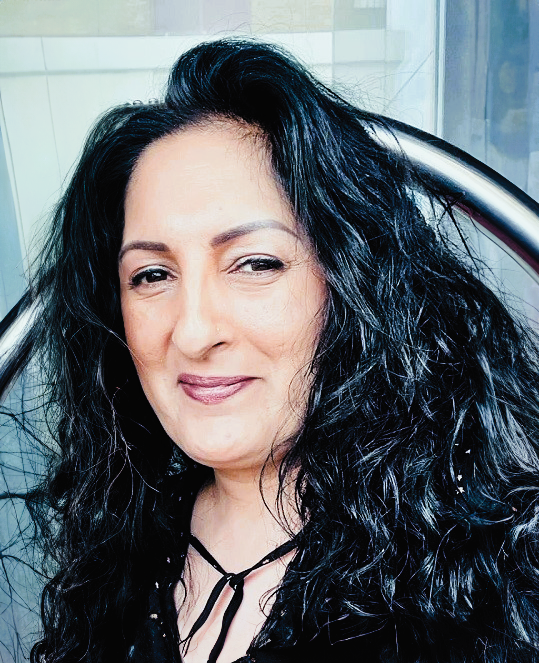
Mala Thapar
- More About Mala
Mala is a South Asian, disabled, and neurodivergent woman and carer with lived experience navigating complex and often unequal health and care systems. She works nationally across NIHR, NHS England, and academic partnerships, championing trauma-informed, inclusive, and culturally rooted approaches to research and public involvement.
Her contributions focus on making health research more accessible, representative, and practically useful for underserved communities. Mala's work empowers marginalised voices and drives real change in how knowledge is shared, interpreted, and put into practice.

Marie-Lyse Numuhoza
- More about Marie-Lyse
Throughout my 20yrs career, I have worked in partnership with both the voluntary sector and the statutory sector to find solutions for social care needs/social justice in collaboration with community led groups.
I relocated to Norfolk, 10 years ago, and have since worked within the community in Mid-Norfolk as a social prescriber, care worker, life connector and most recently as a GP surgery care co-ordinator in Norwich. Those roles have developed my understanding of some of the health and social challenges across both rural and urban Norfolk communities. They have given me an insight into how services are delivered and where there are gaps within service delivery to meet the needs of communities.
I have also co-developed and delivered several knowledge exchange sessions for future health sciences and the medical school students at the University of East Anglia since 2016 on the health needs of refugees and those who are forced to migrate. Currently I am also involved with the new Graduate Entry Medicine Scheme and the EDI group in Clinical Psychology Doctorate department. I often also participate in partnership meetings with groups that support the elderly, and those living with mental health and survivors of domestic violence.
I joined the ARC East of England 3 yrs ago as public contributor. I have since co-chaired the Public and community involvement, engagement and participation (PCIEP) meetings, reviewed researcher’s reports, supported the development of the public involvement hub that advise the researchers in the fellowship program. Finally, I also represent the ARC in the Experts advisory groups and the East of England Inclusion steering group.

Michael Gregg
- More About Michael
I'm Michael, I'm chronically ill and I'm disabled. I got involved in the world of knowledge mobilisation by attending workshops for a project I was supporting. These workshops involved multiple stakeholders being brought together to discuss issues about moving knowledge into practice.
Over time I have become interested in locally-informed knowledge mobilisation that’s also inclusive and accessible. I am also interested in the role the charity sector has to play in knowledge mobilisation.
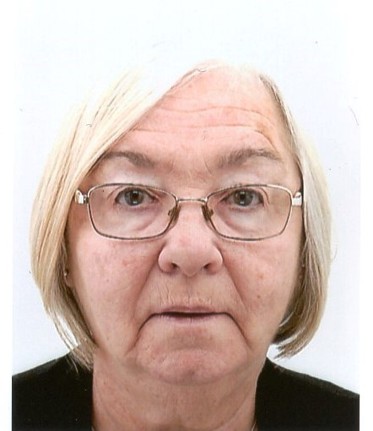
Christina Stokes
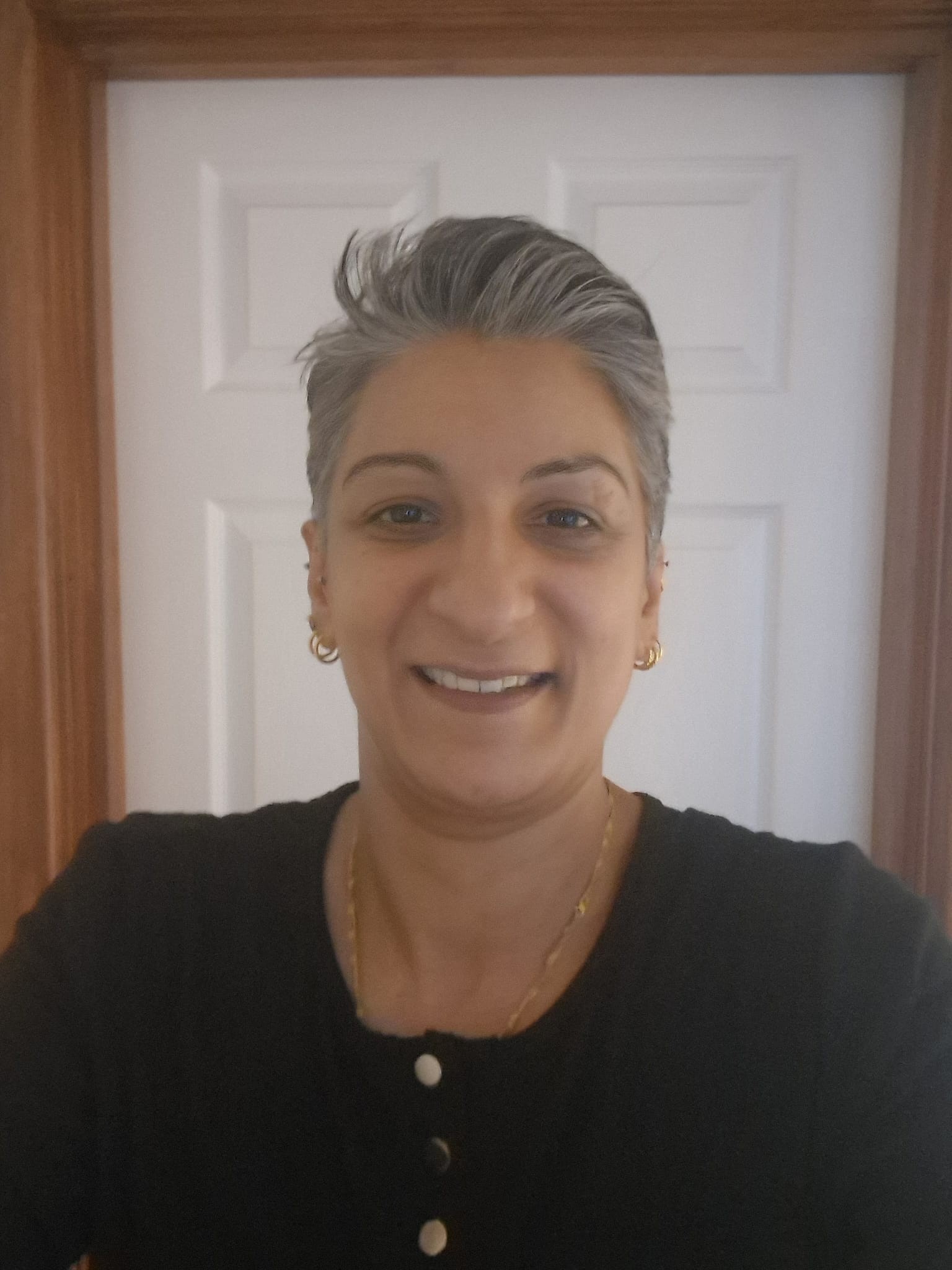
Nasrine Akhtar

Anna Vimal de Saint Pal
Knowledge Mobilisation: In Their Own Words
- A blog by Mala
Why should public contributors care about knowledge mobilisation?
First hearing the term ‘knowledge mobilisation’
When I first heard the term “knowledge mobilisation” I found it quite abstract and academic. It sounded like one of those research phrases that may make sense to people already working in research or policy but does not immediately tell a public contributor where they fit or what they could contribute.
The word “knowledge” can sound as though it belongs mainly to academics or professionals, while “mobilisation” can sound like a system, strategy or policy term. Put together the phrase did not initially feel very accessible.What helped me understand it better was thinking about what happens to research in real life. Research does not create change just because it has been published and people still need to be able to find it, understand it, trust it and use it. For me knowledge mobilisation is about helping research evidence reach the people who need it and ensuring it can be understood, trusted and used in ways that improve health and care.
I have also learned that knowledge mobilisation is not only something that happens at the end of a research project. Public contributors can support it across the whole research cycle from helping shape the original questions to thinking about how findings are shared, understood and used in practice.
What helped it make sense
I joined the Knowledge Mobilisation Public Advisory Group around a year ago, the group is still relatively new, so these are early reflections, but being part of it has helped me understand Knowledge Mobilisation in a more practical way as it has shown me that this work is not simply about sending information out. It is about asking whether evidence reaches the people and communities it is meant to support, whether it makes sense to them and whether it can be used in the real world.
One thing I noticed when reviewing existing resources and discussing the website was how easy it is for information to become text-heavy or academic without meaning to. A resource may be useful in principle but still not feel welcoming, practical or accessible to someone who is new to research or less familiar with the terminology and can leave public contributors thinking, “What is my role here?” or “Is this really something I can contribute to?”
That is why public contributors should care about knowledge mobilisation as research may identify a better way to improve health and care, but that does not automatically mean it will reach patients, carers, communities or services. Findings can remain in academic papers, reports or professional networks, even when they could be useful to people.
An everyday example might be a research project that shows people need clearer information before an appointment or a different way of being invited into a service. Knowledge mobilisation would not just mean publishing that finding. It would mean working with patients, carers, staff and services to think about how an appointment letter, care pathway or public resource could change in practice.
Sometimes the benefit may be indirect. Knowledge mobilisation may improve a process, professional practice, service pathway or resource rather than direct patient care, but if that helps services work better and makes information clearer for people, patients and communities can still feel the benefit.Why public involvement should not stop at publication
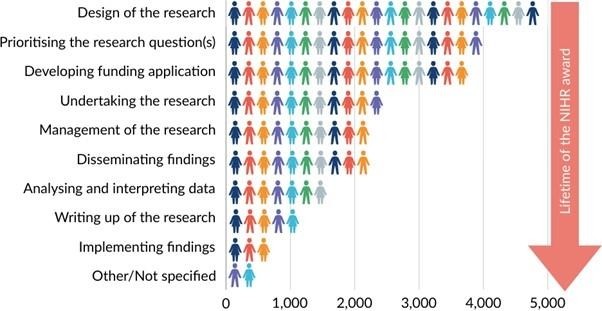
A graph that was shared with me from the National Institute for Health and Care Research (2023) makes the point clearly. Public involvement is much more common at the beginning of research such as research design and developing research questions, but it reduces in later stages such as writing up and implementing findings.
That matters because these later stages are where research often needs to be explained, adapted, shared and used.
Public involvement should not be a front door that closes at publication.
The number of reported involvements of patients and the public by type of involvement at each stage of the lifetime of an NIHR award
What public contributors can add
Public contributors can help bridge the gap between evidence and real-world practice and we do not need to be technical knowledge mobilisation experts to make a meaningful contribution - we bring lived experience and practical questions that may otherwise be missed.
For example, we can ask: Who is this information for? Would people understand it? Would they trust it? Is the language clear? Is it accessible? Does it reflect real-life pressures and barriers? What might stop people using it? What would make it easier? These questions are not minor details as they can affect whether research findings are actually useful to the people they are intended to support.
Accessibility, trust and feedback
Accessibility and inclusion are also central to this. They are not additions to consider at the end because they are part of whether people can participate in knowledge mobilisation at all. For me, this includes practical things such as receiving materials in advance, using plain language, having clear meeting structures, having different ways to give feedback and being able to share afterthoughts later.
This matters because not everyone processes information, communicates or reflects in the same way. Sometimes people may not feel ready to contribute to the meeting itself but they may have an important thought afterwards and I often find that I need time to process information and think through what has been discussed and by having a route to send afterthoughts or ideas later can make involvement more meaningful and more inclusive.
Trust is another important part of this, whether people engage with research or health information can be shaped by previous experiences, culture, stigma, language, accessibility and whether they feel seen and understood. Public contributors can help raise these issues early before a resource or message has already been finalised and can support knowledge mobilisation in many practical ways. We can review plain English resources, identify unclear wording or assumptions, advise on accessibility and different formats, help tailor resources for different audiences and raise barriers that professionals may not immediately see.
From my own experience so far, my involvement has mainly been around reviewing existing resources about knowledge mobilisation, discussing gaps and thinking about how public contributors could be better supported to understand and take part in this work. I would not claim that our group has directly tested every approach with communities or directly influenced implementation outcomes yet. However, I can see an important role for the group in drawing together learning from National Institute for Health and Care Research (NIHR) Applied Research Collaborations (ARCs) Knowledge Mobilisation Fellows, and others working in knowledge mobilisation including what has been tested with people with lived experience, what worked well, what had the greatest impact and why.
Sharing that learning more widely could help public contributors, researchers and services understand how knowledge mobilisation works in practice. There is a real difference between asking public contributors to comment on a finished resource and involving us early enough to shape whether knowledge can land well.One overlooked opportunity is creating a clear feedback loop as public contributors often give time, thought and lived experience but it is important to know what happened next. What changed because of public involvement? What was not changed and why? That feedback is not only about feeling heard, it is also a learning and accountability mechanism because it helps contributors and teams understand whether involvement changed the reach, usefulness or eventual impact of the work.
Why public contributors need to stay involved
For me, knowledge mobilisation is about more than moving research from one place to another. It is about making sure research does not stay locked away in academic or professional spaces when it could support better care, better decisions, better systems and better understanding.
Public contributors are not simply an audience for knowledge mobilisation. We are part of how it happens.
- A blog by Michelle
cbvcb