
Working with Community Members to Translate Research Outputs
Translating an animation which shares research findings into another language isn’t just about exchanging one word for another. To create a translation which is truly meaningful to the community requires time, iteration and most importantly, collaboration.
Through discussions with colleagues and conducting outreach meetings, we developed the idea to translate an animation from the CO-ASSIST project about the support parents of children with obsessive–compulsive disorder (OCD) need.
Original animation:
How We Started
We began by working with one public contributor who produced an initial Urdu translation of the script. Then we shared it with two more Urdu‑speaking public contributors to gather their feedback and suggestions.
Straight away, we realised that some words don’t have a simple or direct translation. Even the term “obsessive-compulsive disorder” had several possible Urdu versions, each with a slightly different meaning.
Working Together to Agree on the Best Words
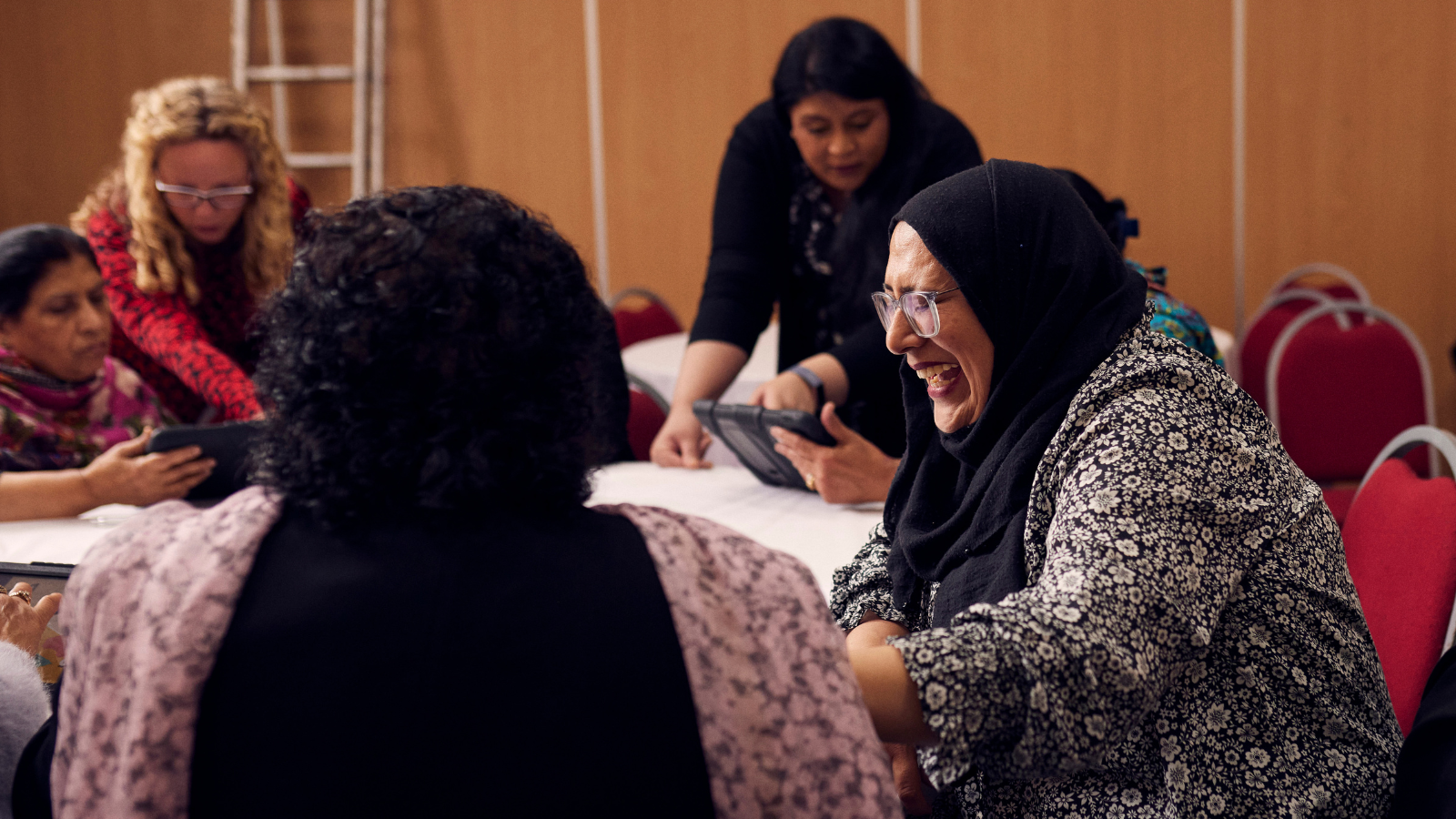
To finalise the translation, we ran a workshop with Awakening Minds, a local community group in Rochdale which provides community-based mental health support. Meeting face-to-face with several Urdu‑speaking community members made a big difference.
Together, we looked at the script line by line, comparing alternative translations for each section. The group helped us choose:
- words that were easiest to understand
- language that felt culturally appropriate
- the version that sounded most natural rather than formal or clinical
Once we had the final agreed script, we carried out a final check with two Urdu-speakers before recording the voiceover.
Why Collaboration Matters
Community members shared valuable insights about how Urdu speakers talk about certain topics, which words people might not understand, and which phrases might be most appropriate.
The collaboration also built trust. By involving the community directly, we showed that their voices matter in our work and in return, they helped shape a resource that will reach people more effectively. It was a reminder that the best communication is co-created, not produced in isolation.
More Than a Translation
Translating a script may seem like a small task, but doing it together turned it into something much bigger: a shared effort to make information easier to understand and more welcoming for everyone. This is the kind of partnership that helps us grow, learn, and make our work truly inclusive.
The team would like to thank all the public contributors, organisations and colleagues who made this translation possible.
You can read more about CO-ASSIST and our subsequent project CORuS, where we have been developing a prototype of an online platform to support parents of children with OCD here.
Watch the Urdu version of this animation:
Authors: Aneela McAvoy, Rebecca Pedley, Emma Sowden, Rasha Alkholy
Disclaimer: we used Microsoft co-pilot to refine this blog.
This study was funded by the National Institute for Health Research (NIHR) Research for Patient Benefit (RfPB) programme (Grant Reference Number: NIHR2000720) and by the NIHR Applied Research Collaboration Greater Manchester (ARC-GM) (NIHR200174). The views expressed are those of the author(s) and not necessarily those of the NIHR or the Department of Health and Social Care.