Skip to content

Accessibility

Fairer Futures for Young People's Mental Health Research and Care 2025


Find out more about this project, its aims, and try out the resources

The story on these resources

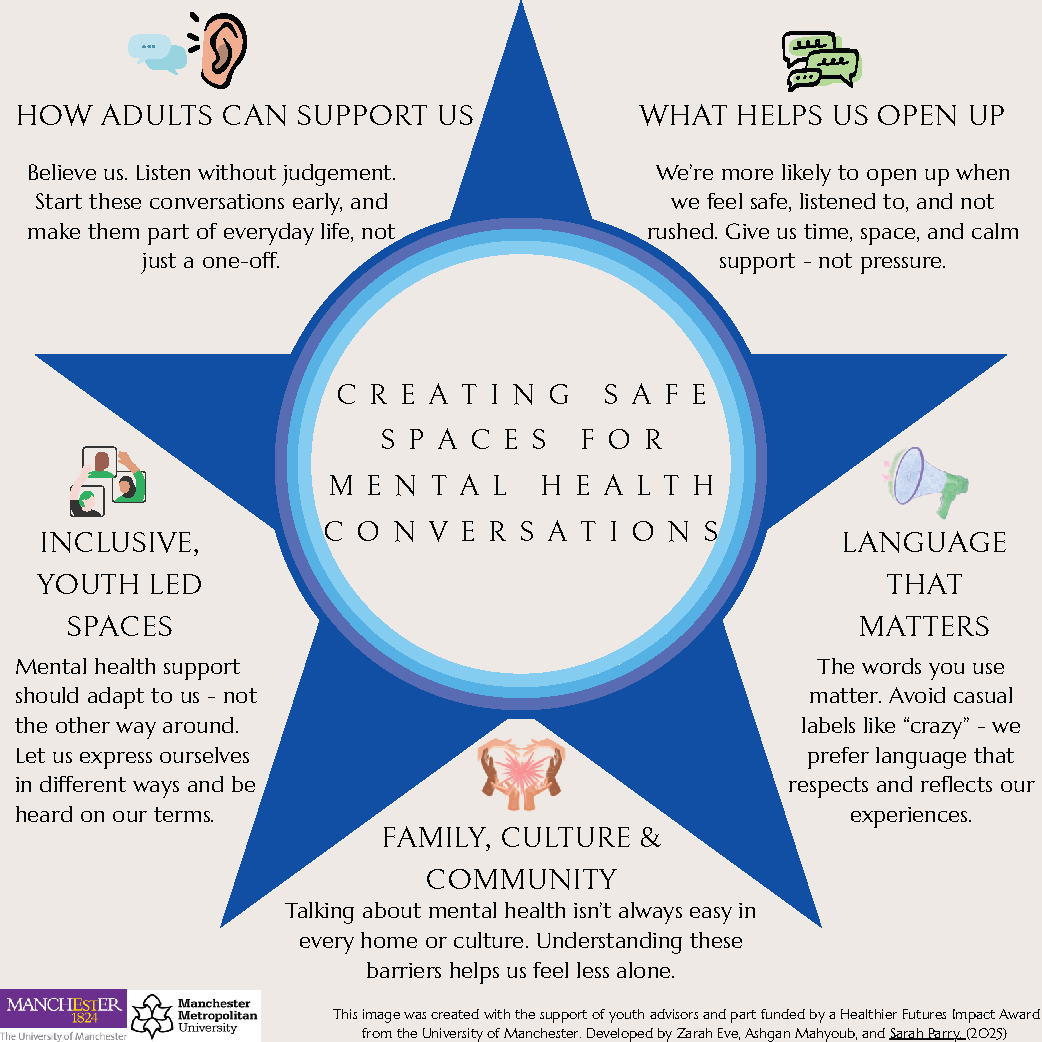
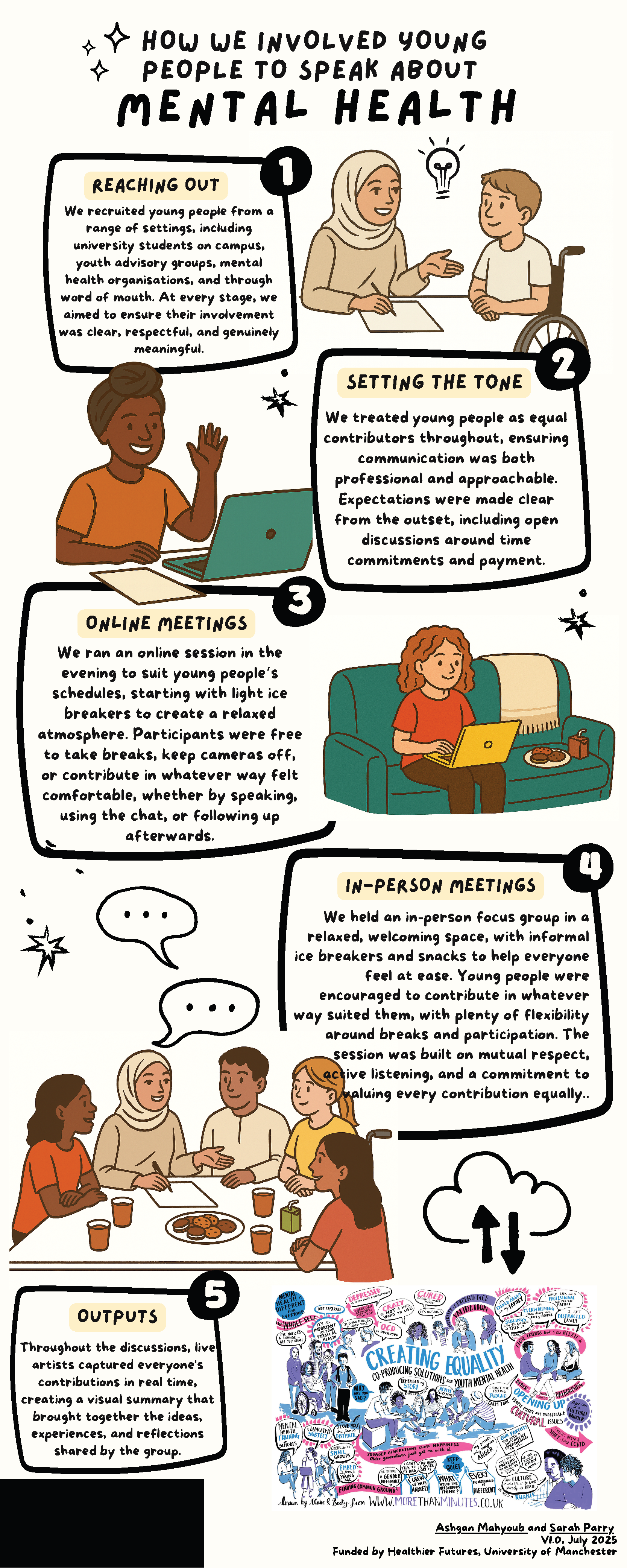
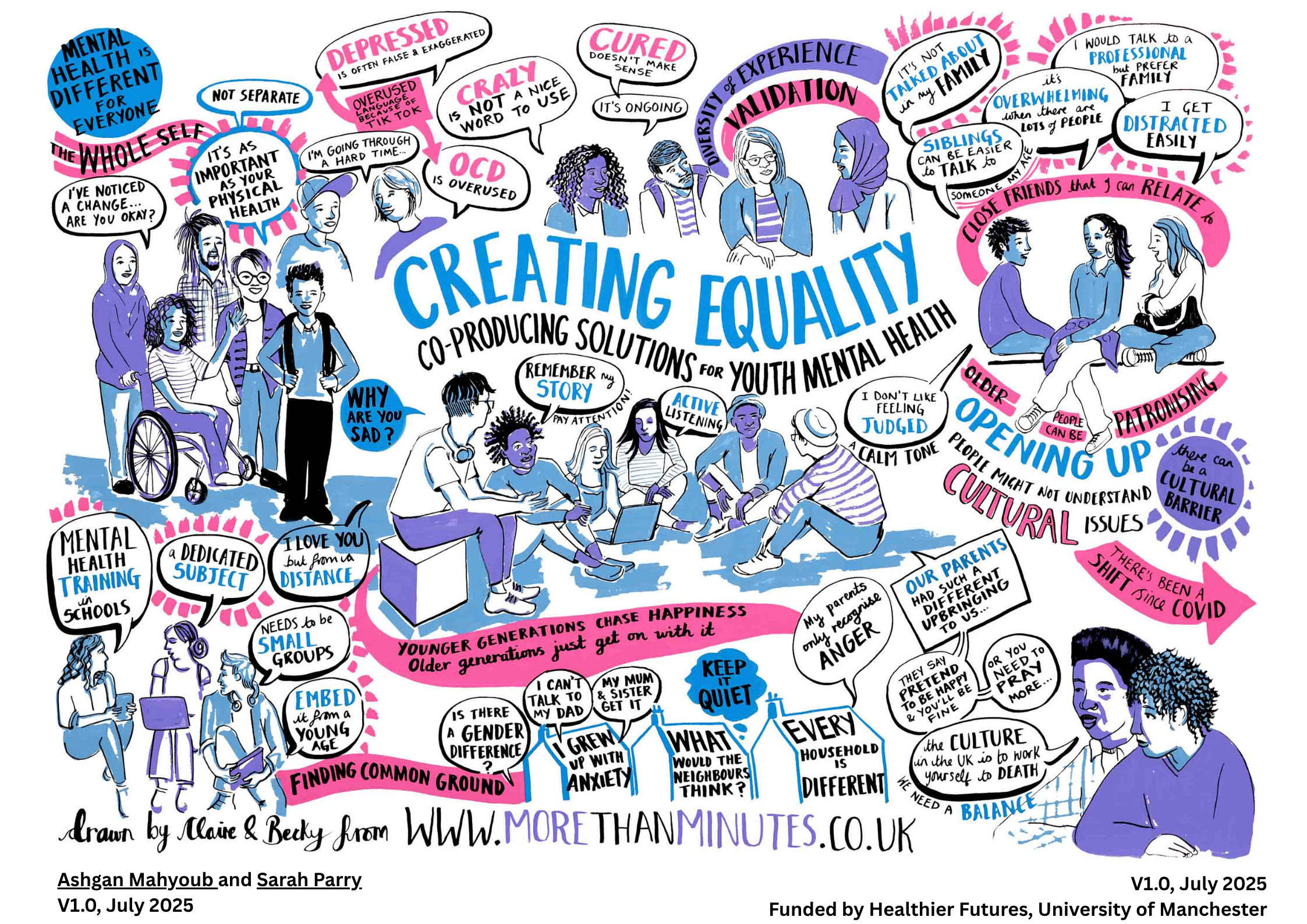

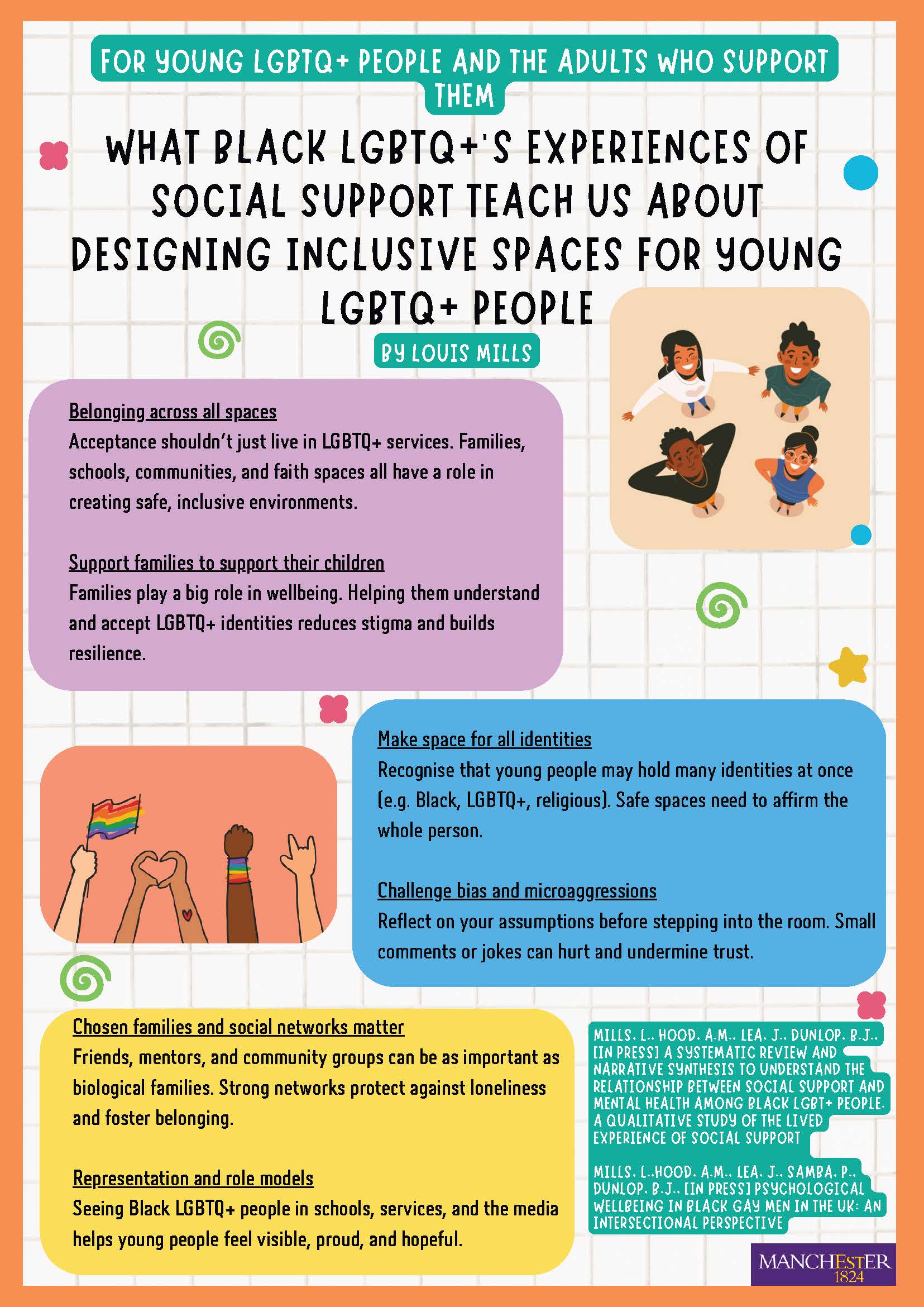
The resources on this page were created with funding from a Healthier Futures impact award from the University of Manchester in 2025. You can use these free resources as is helpful to you.

The documents have been designed to:

  • Help professionals feel more confident in supporting young people.
  • Improve communication between young people, families, and services.
  • Make services more inclusive and accessible for all young people.
  • Amplify young people’s voices in mental health care and research.

Together, we aim to create fairer, kinder, and more effective mental health research and services for all young people.


Resources

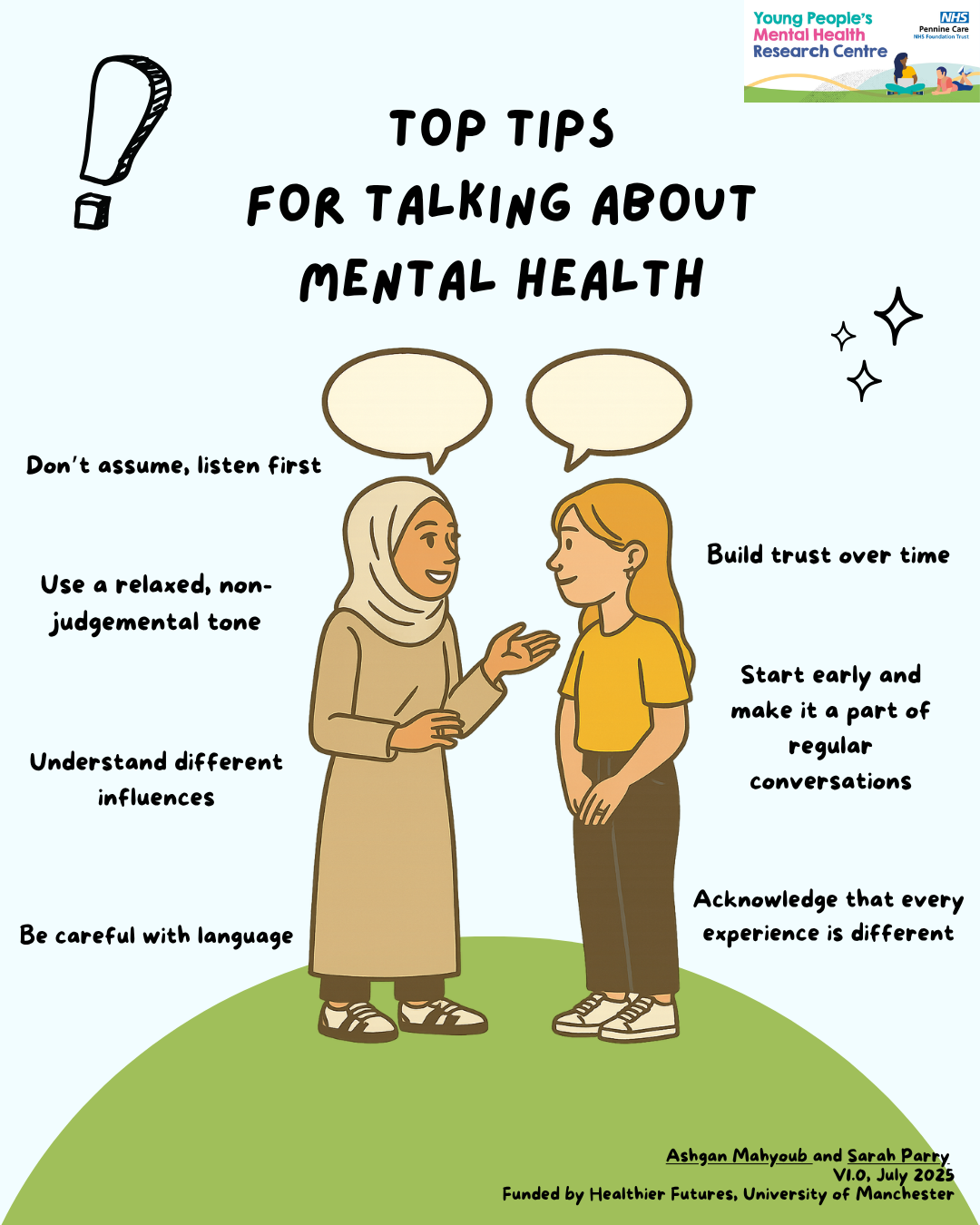
A graphic showing two girls talking to each other with the words Top tips for talking about mental health

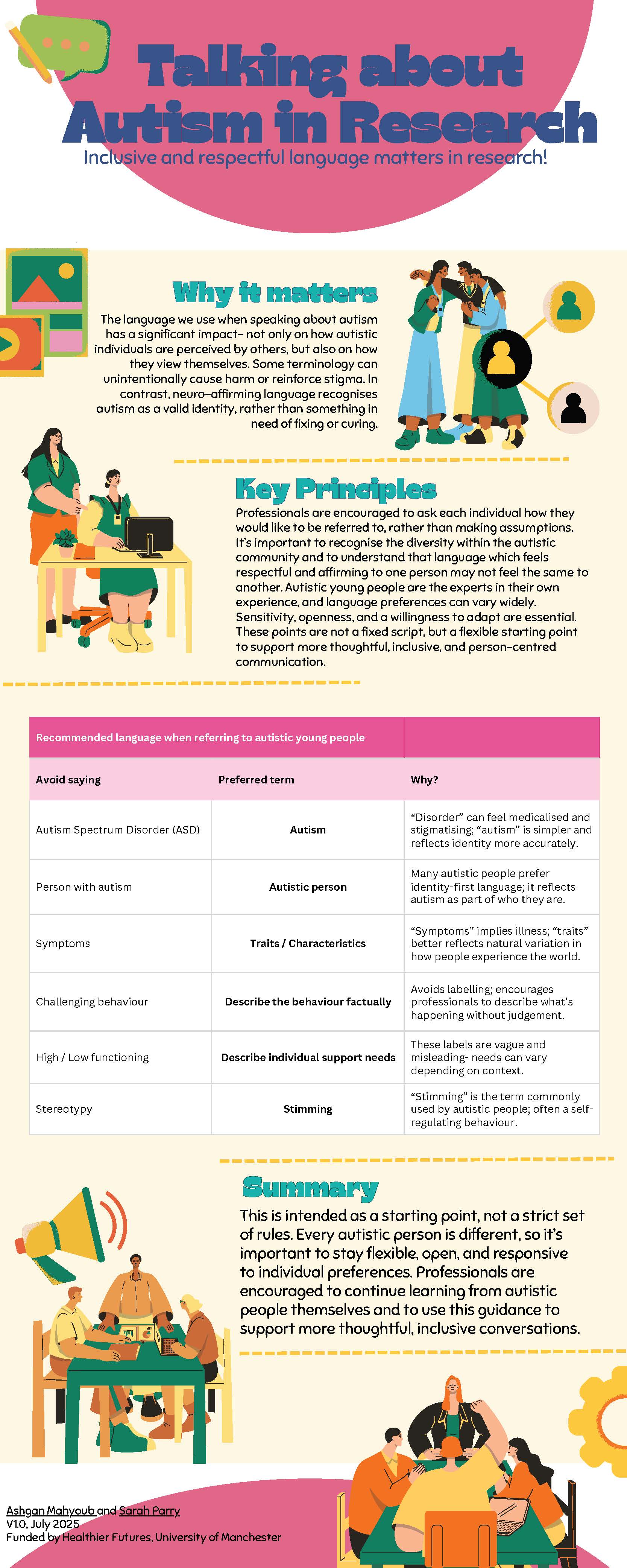
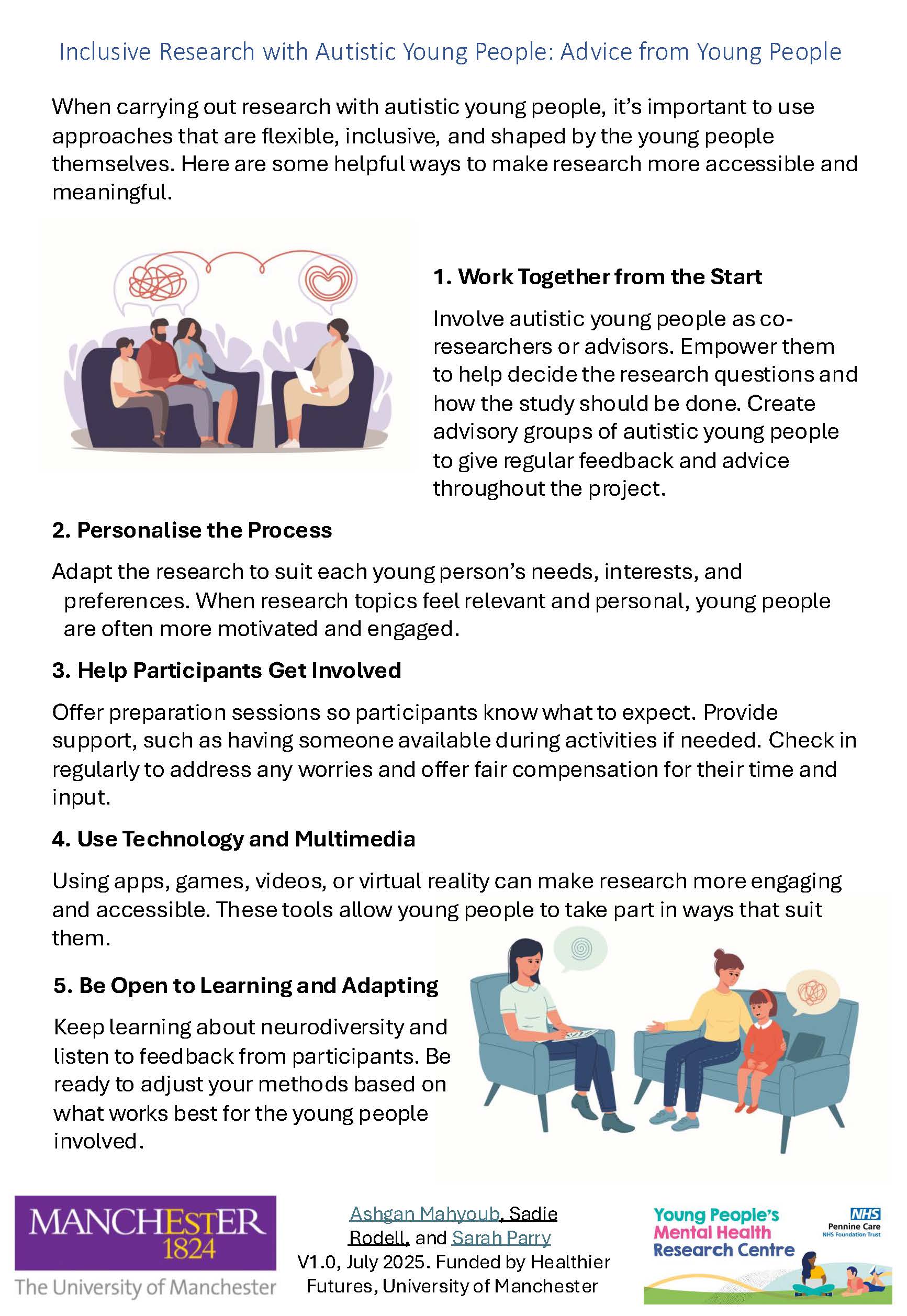
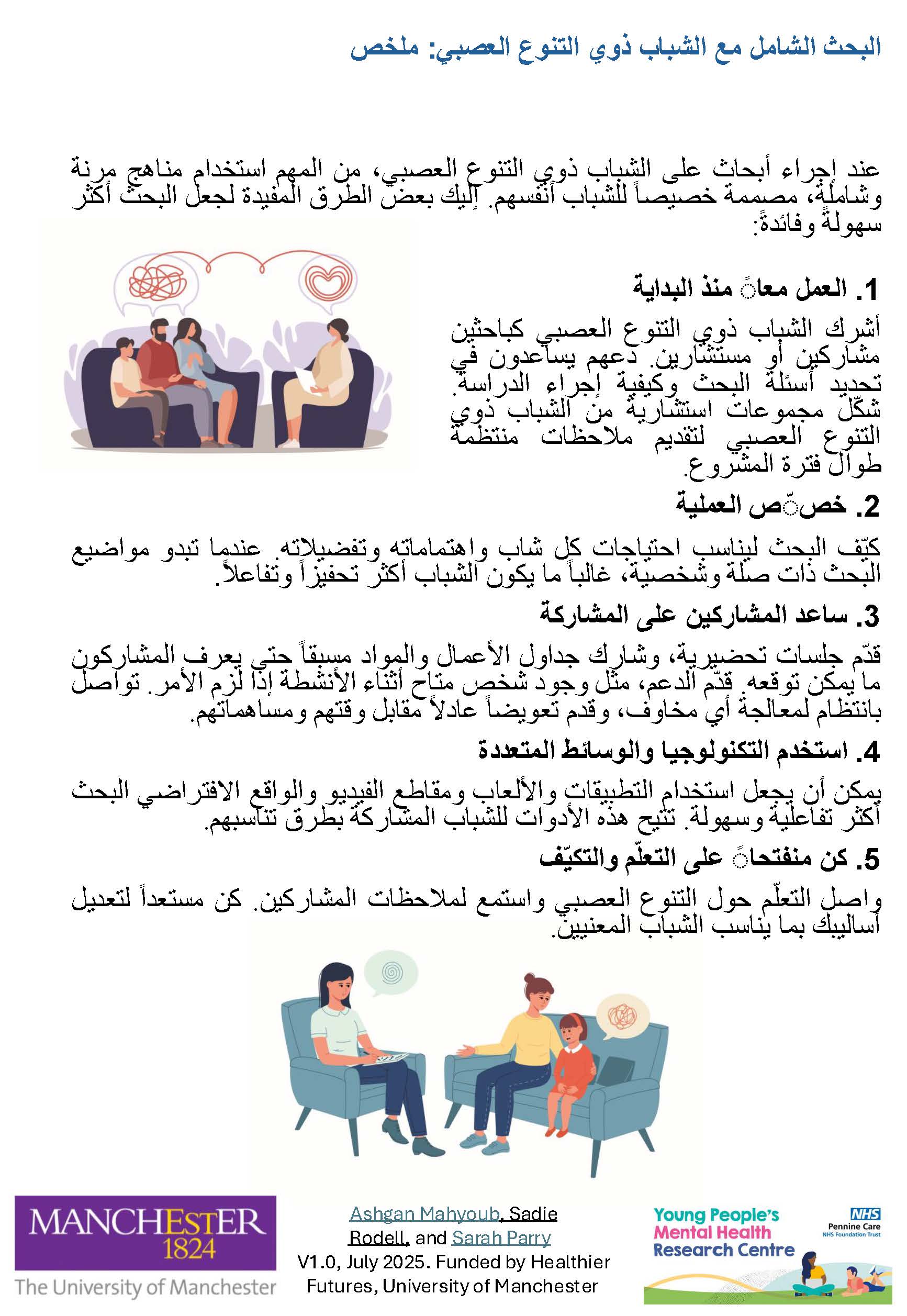
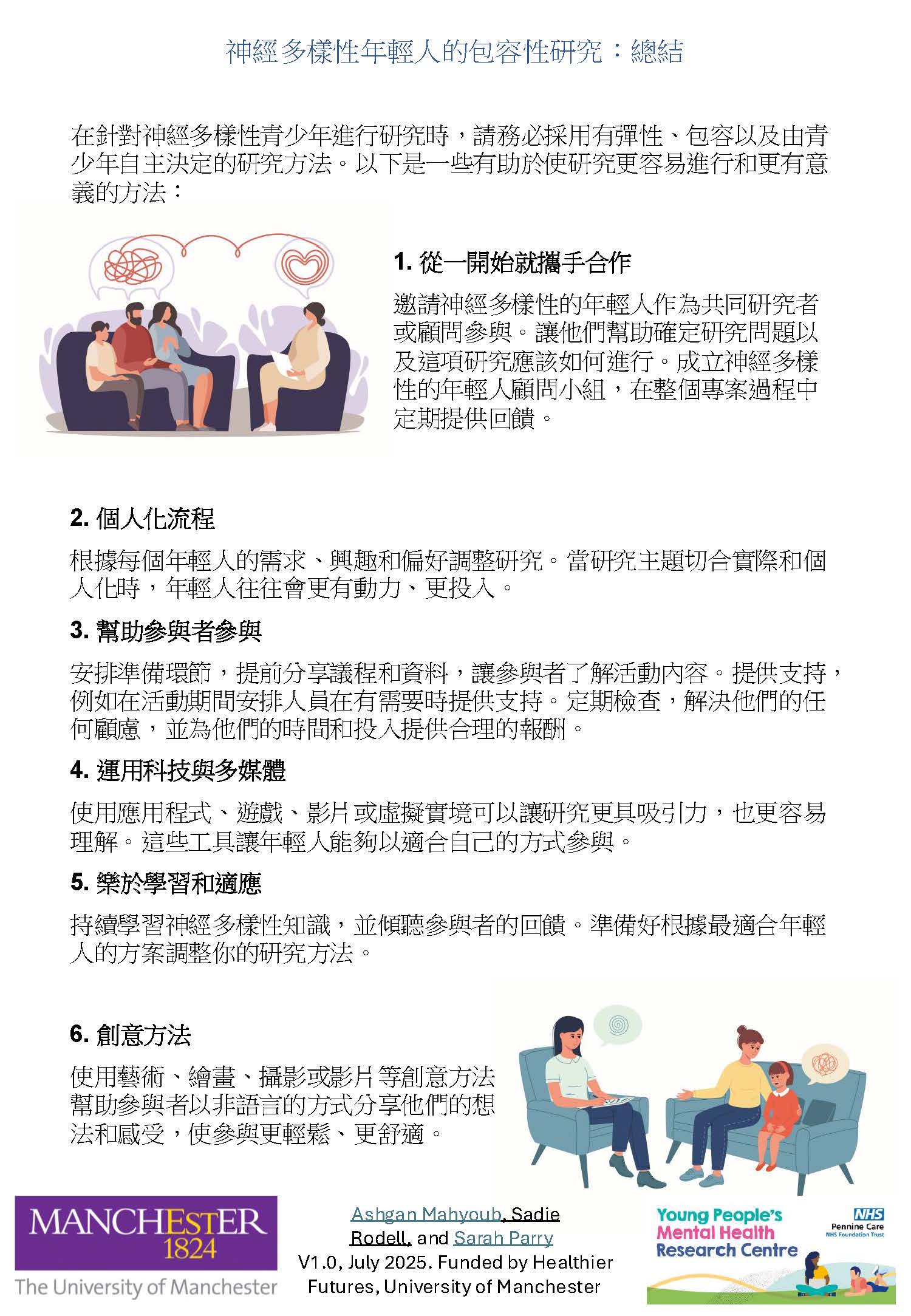
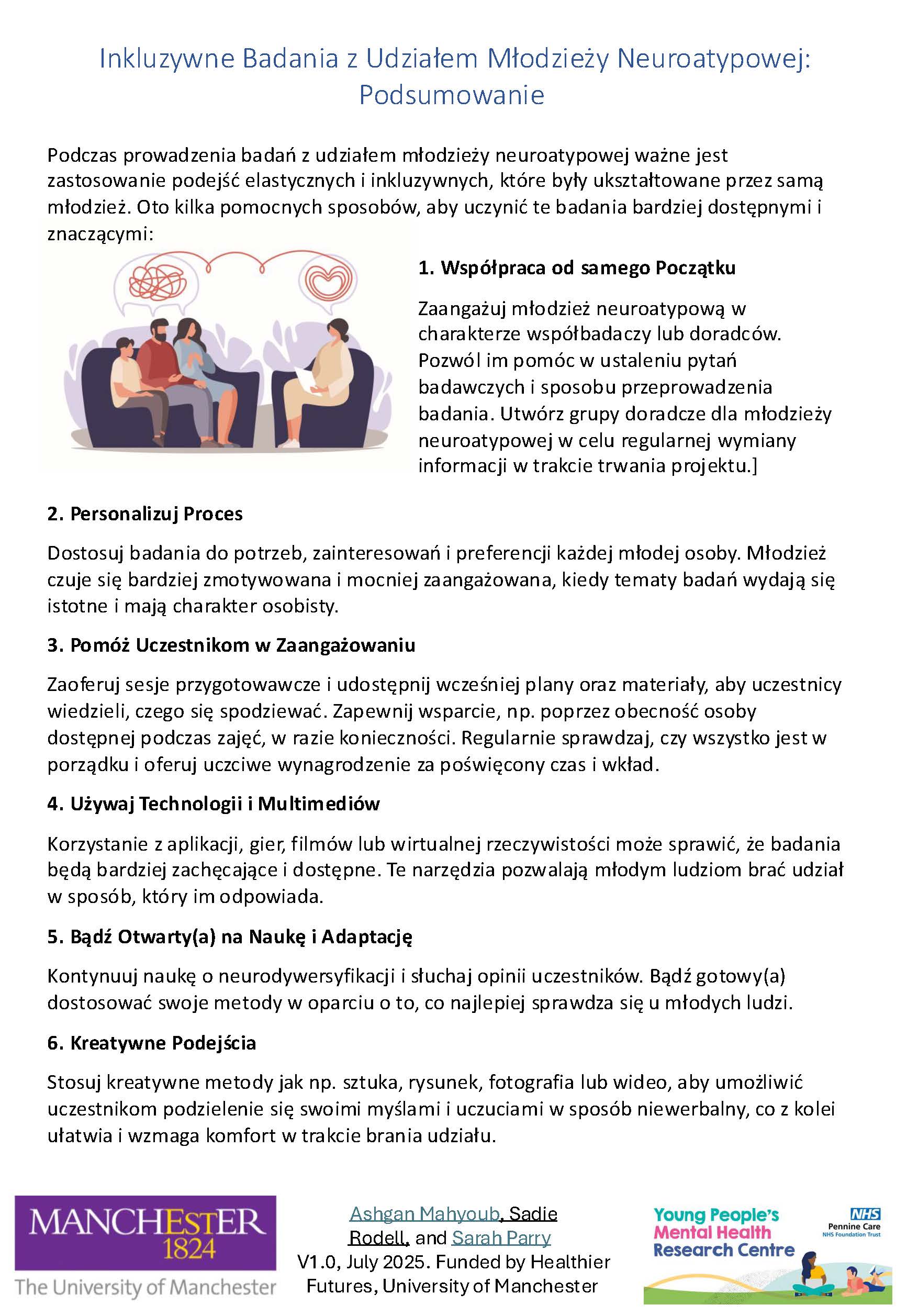
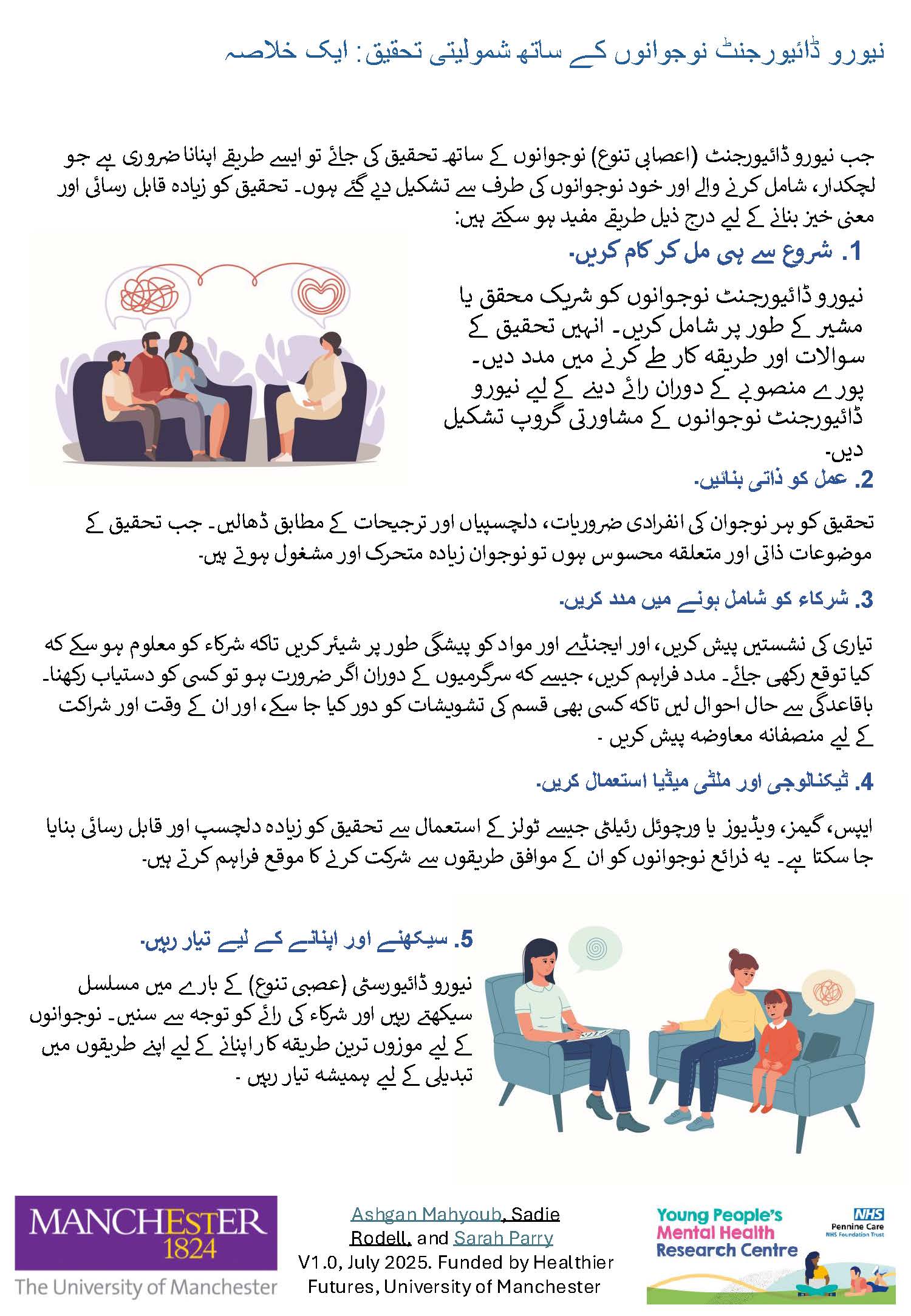
Neuroinclusive research

Why is neuroinclusive research important?

Autistic children and young people are frequently excluded from research. This exclusion risks perpetuating mental health services that are poorly aligned with their needs and experiences.

It is important autistic young people can share their valuable insights into what supports their wellbeing, what creates barriers to care, and how services can be made more accessible, respectful and effective.

Ensuring that research is inclusive is an important step towards creating services that genuinely meet the needs of all children and young people.


How can these resources help?

The resources presented here are designed to support neuroinclusive research by offering practical guidance on adapting research design, materials and processes to better include autistic children and young people.

By prioritising flexibility, accessibility and meaningful participation, these resources aim to reduce exclusion and enable autistic voices to shape the development, delivery and evaluation of mental health services.

Resources


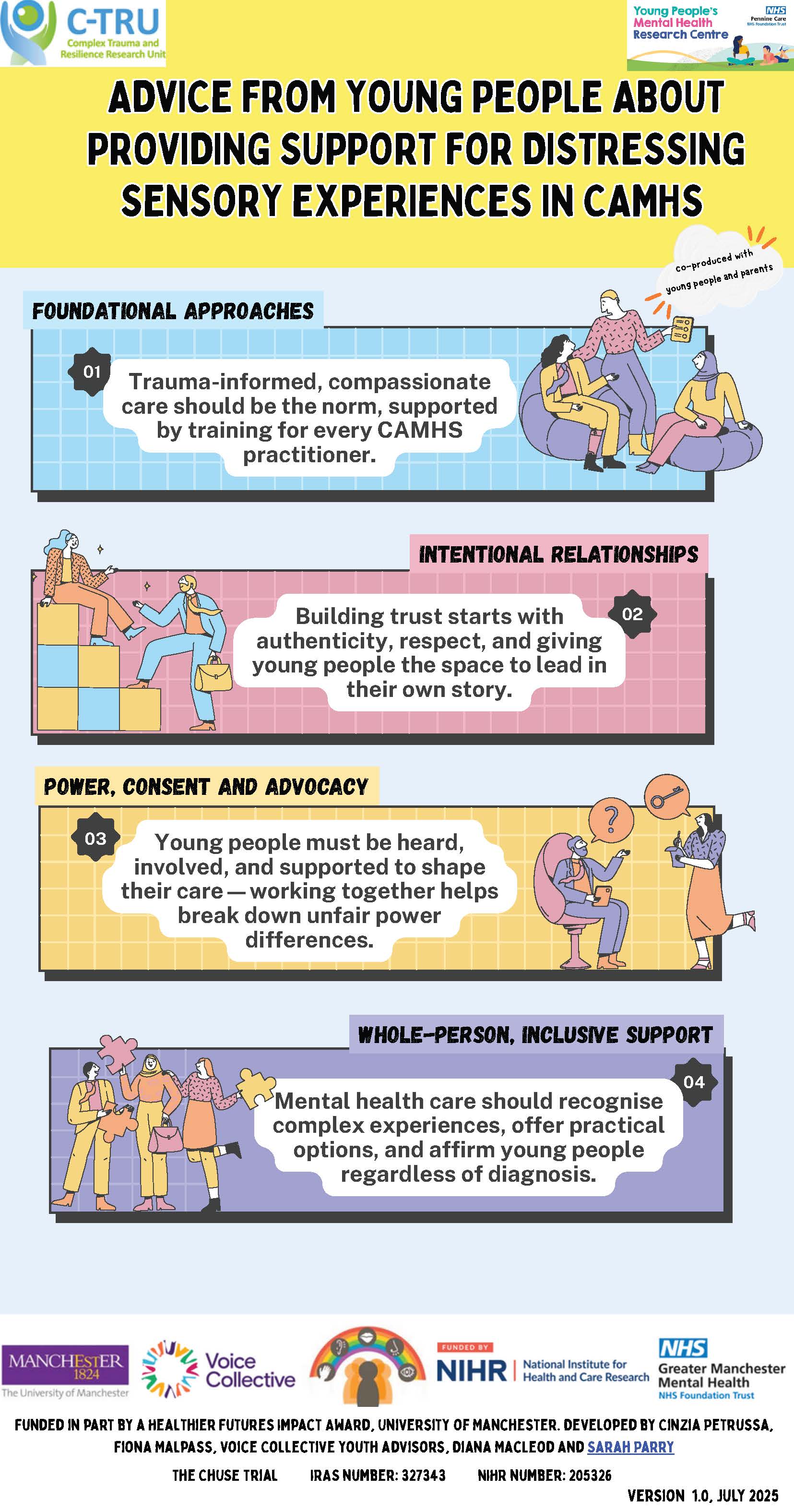
Supporting children and young people who hear voices and see visions

Why is this topic important?

Children and young people can experience a range of distressing sensory experiences, including hearing voices, seeing visions, and sensing felt presences.These experiences are often poorly understood and can be frightening, isolating, and difficult to articulate, particularly when young people fear stigma, disbelief, or misinterpretation.

Support can focus on symptom reduction, but it is also important to understand the meaning, impact, and context of these experiences in young people’s lives.


How can these resources help?

The resources introduced here were designed to support communication with children and young people about their experiences.

The resources were developed with young people with lived experience of distressing sensory experiences and with Voice Collective. They aim to promote validation, emotional safety, and choice, while supporting practitioners, families, and researchers to respond in ways that are respectful and non-judgemental.

We are undertaking further work in this area through the ChUSE Trial.

Resources

A wavy orange line used to separate two sections of the webpage

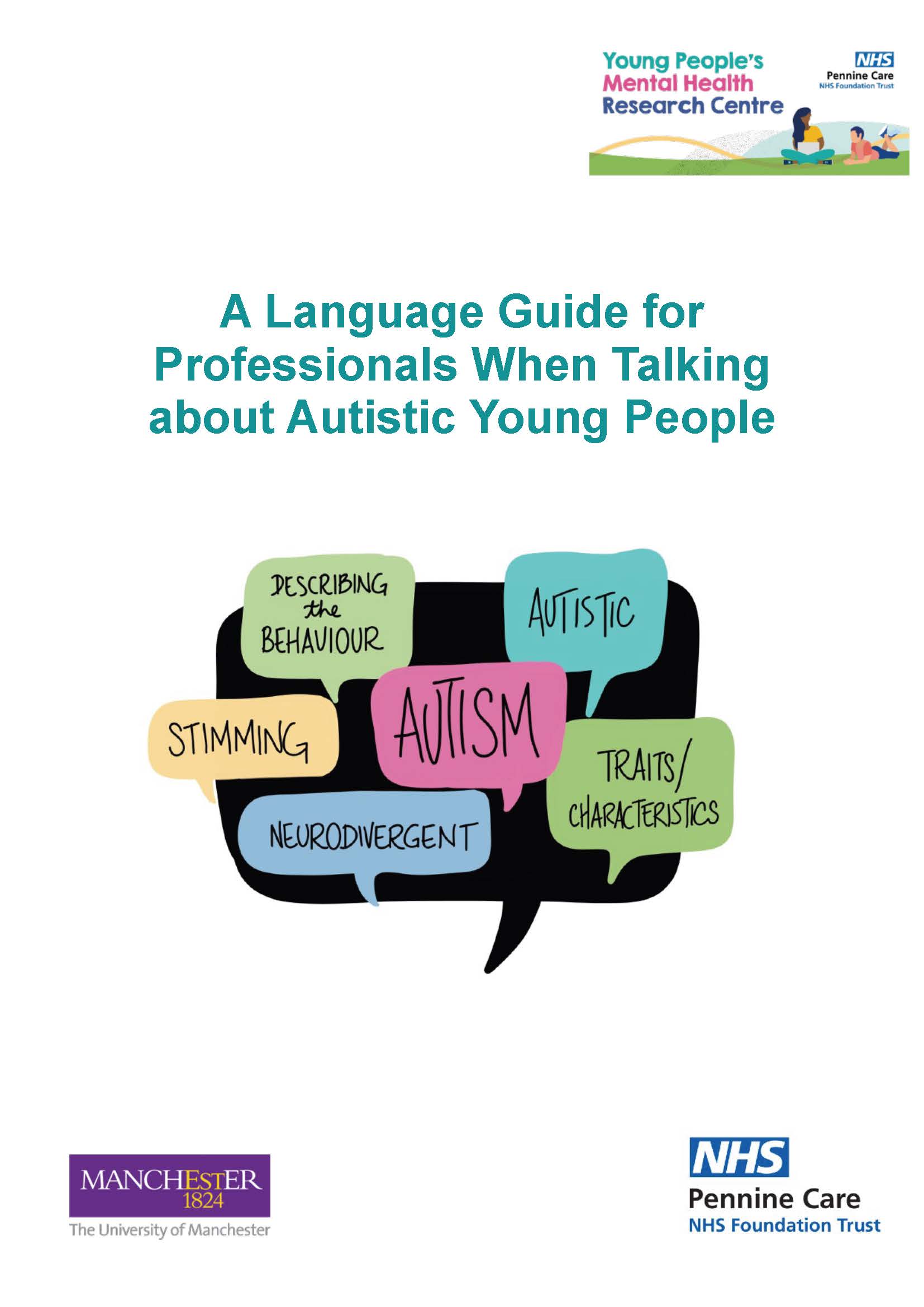
Resources for schools

The resources on this page have been designed to help schools create a safe and respectful environment for all their students.

Resources

Contact

For more information, you can contact:

Photo of Sarah Parry, a researcher leading on this work


Sarah Parry
The University of Manchester & 
Pennine Care NHS Foundation Trust
e: sarah.parry@manchester.ac.uk

Funding

This work was funded by an award from
Healthier Futures, which is based at
The University of Manchester.

Please complete the following form to download this item:


Once submitting your information you will be presented with a new 'Download' button to gain access to the resource.